

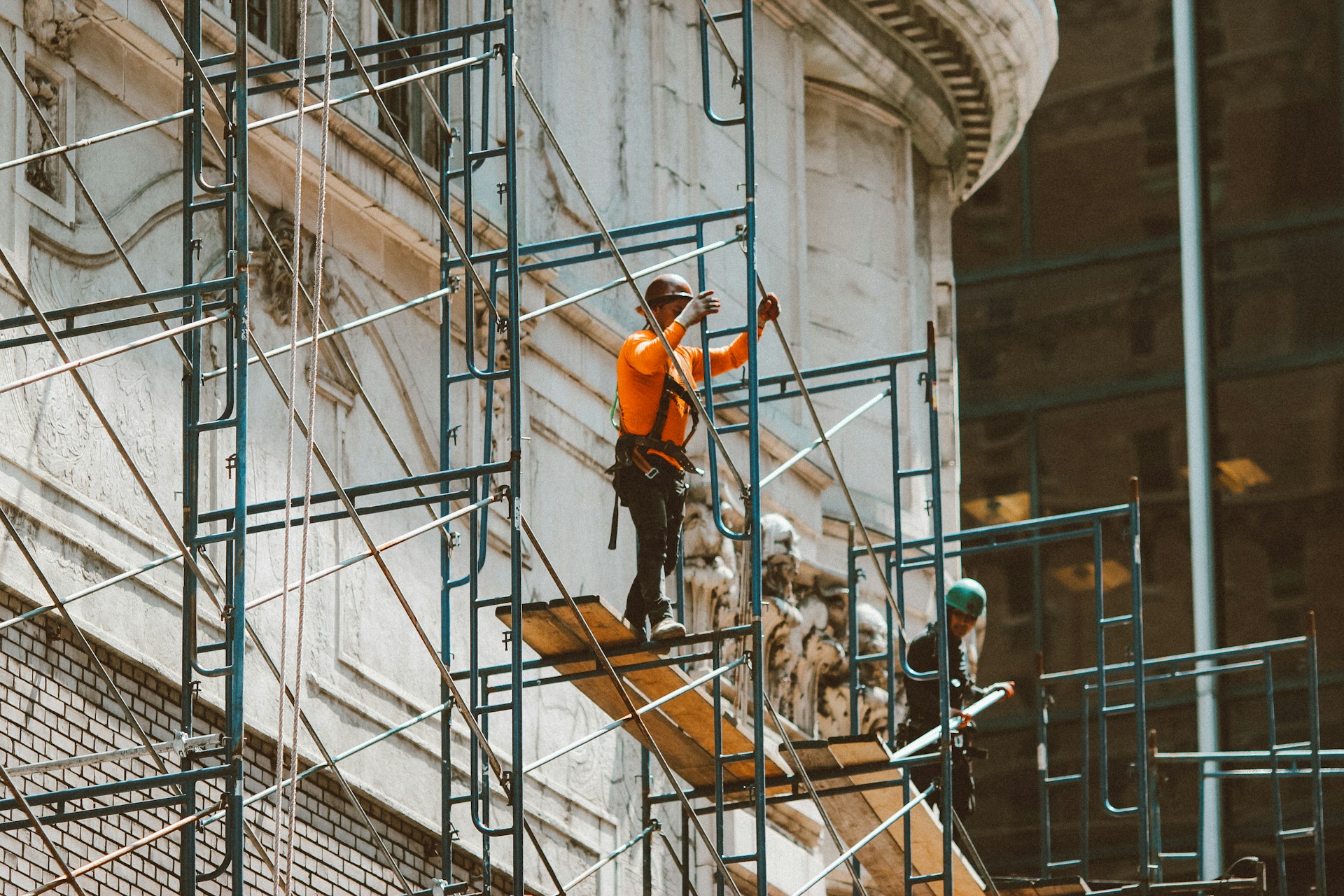
A Manhattan personal injury law firm has published a guide explaining New York state’s Labour Law Section 240, known as the Scaffold Law — one of the few statutes in North America that places strict liability on property owners and contractors for elevation-related construction injuries.
The guide, published by the Law Office of Steven Louros, outlines how the law works, who it covers, and what compensation injured workers may pursue. While the law applies only in New York, its framework offers a reference point for occupational health and safety professionals examining how legal accountability shapes fall protection on job sites.
How strict liability differs from negligence
Under the Scaffold Law, an injured worker does not need to prove that a property owner or contractor was careless. Liability attaches if proper safety equipment was not provided or failed at the time of the accident.
This is different from traditional negligence claims, which require proof of fault. The law focuses on whether the right equipment — scaffolds, ladders, hoists, harnesses, or other fall protection — was in place and functioning when the incident occurred.
Property owners, general contractors, and construction managers who hold authority over site safety can all be held liable under the statute. Liability is not limited to a worker’s direct employer.
Who the law covers
The Scaffold Law applies to workers performing elevated construction tasks. Covered workers include construction and demolition workers, roofers, painters, window washers, and renovation crews.
Common incidents covered under the law include:
- Falls from scaffolding on high-rise projects
- Ladder falls at construction sites
- Roof falls across various boroughs
- Injuries from falling tools or construction debris
Compensation available to injured workers
Workers who bring a successful Scaffold Law claim may pursue damages for:
- Medical expenses
- Lost wages
- Pain and suffering
- Permanent disability
- Wrongful death, in cases involving fatal accidents
Construction sites in New York City operate daily with scaffolding, ladders, hoists, and high-rise work — conditions that create consistent elevation-related hazards. The Scaffold Law was designed to address those risks by placing a heightened duty of care on those who control job site safety.
“Construction workers help build and maintain New York City every day, and the work often involves significant risks,” said Steven Louros, founder of the law office. “We created this resource so workers and their families can better understand the protections that exist under Labor Law Section 240. The Scaffold Law is intended to hold responsible parties accountable when safety measures are not properly provided.”
The guide is available in English, Mandarin Chinese, Cantonese, Korean, and Spanish.